Most brands have very little idea what is happening in the bottom 80% of their accounts.
Not because they do not care. Because there is no affordable way to find out. A field team of ten can cover a few hundred sites properly. It cannot cover fifteen thousand. So the big accounts get visited, the small ones get a delivery, and the rest is guesswork built on sell-in data that arrives weeks late and says nothing about what is actually on the shelf.
We build AI voice agents to close that gap. Usually that means taking orders. But the same phone call can collect information, and we wanted to test the data side at a scale nobody could argue with.
So we picked a product we had no relationship with and no data on, and called every corner shop we could find in the country.
What we did
BuzzBallz are pre-mixed cocktails in a plastic ball. They have gone from nowhere to everywhere in UK convenience in about two years. That made them a good test. The product moves fast, people talk about it, and there is almost no public data on where it actually sells.
We built a calling agent called Sam and gave it three questions: do you stock BuzzBallz, what do you sell them for, and which flavour sells best. Pricing was not something we set out to publish, so nothing on price appears below, but the question let store owners talk freely rather than feel interrogated.
Then we called 10,000 independent convenience stores across England, Scotland, Wales and Northern Ireland. Start to finish took under 48 hours.
No incentive and no prior relationship. A call from a number they did not recognise, and about half of them talked to us.
That answer rate is the number I find most interesting, and it is the one people keep asking about. The assumption is that nobody answers the phone any more, and that shopkeepers certainly will not talk to an AI. Neither turned out to be true.
What they told us
- Distribution is not what the national average suggests. Stocking rates in England, Scotland and Wales sit within two points of each other, between 74.7% and 76.9%. Northern Ireland sits at 34%. Same country, same brand, less than half the shelf presence. If you were planning a trade push off a UK-wide number, you would have missed that completely.
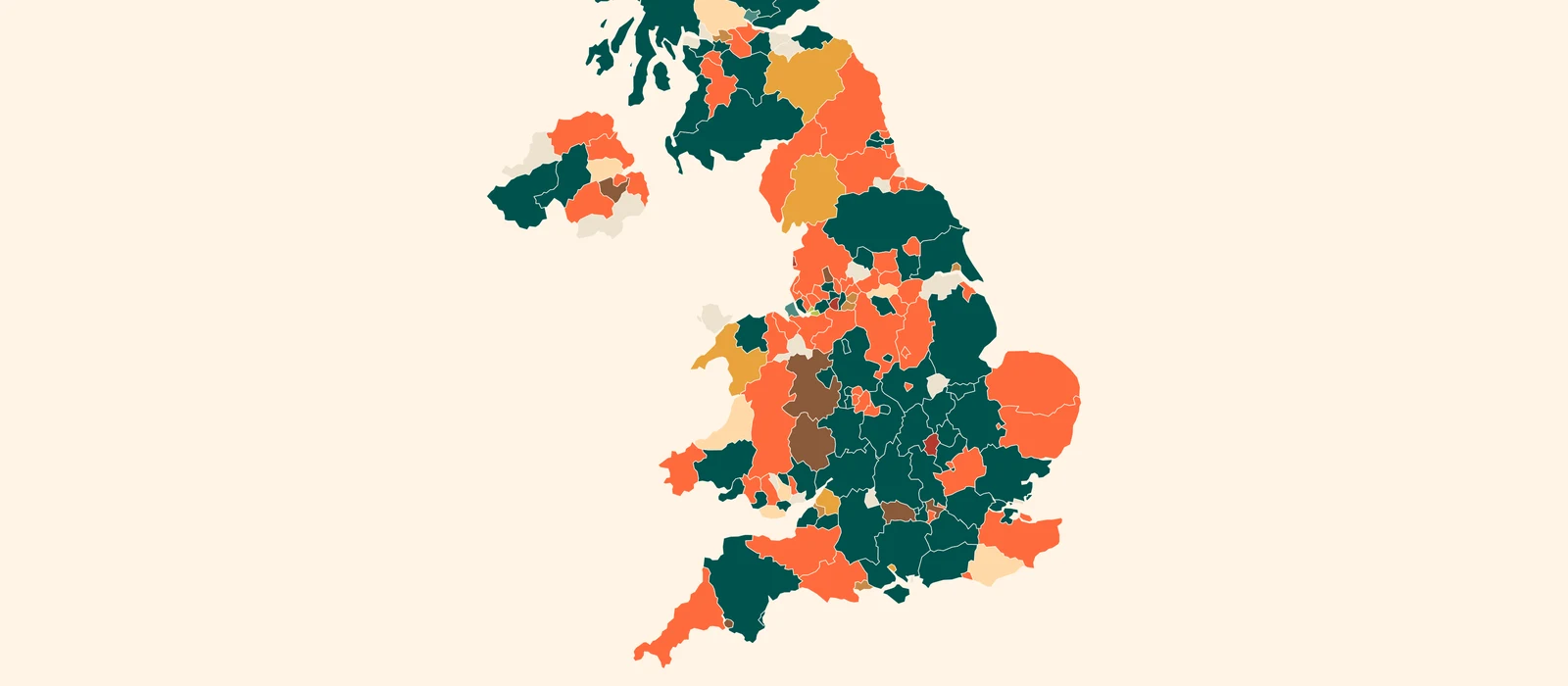
- The country is split down the middle on flavour. Strawberry 'Rita and Berry Cherry Limeade came out roughly level nationally. But the county map is not a blend, it is two blocks. Scotland and the north of England go Strawberry 'Rita. The east, Essex, Hampshire and Wiltshire go Berry Cherry Limeade. Wales is dead level between them. Northern Ireland puts Lime 'Rita second, which nowhere else does. That is something a brand could act on next week: range recommendations change by region, and so does the conversation you have with your wholesaler about what to push.
- One flavour behaved strangely. Chili Mango came up unprompted when store owners were asked about BuzzBallz in general, but rarely got named as a best seller when we asked directly. Memorable, not bought. That is not a signal you would get out of sell-in data.
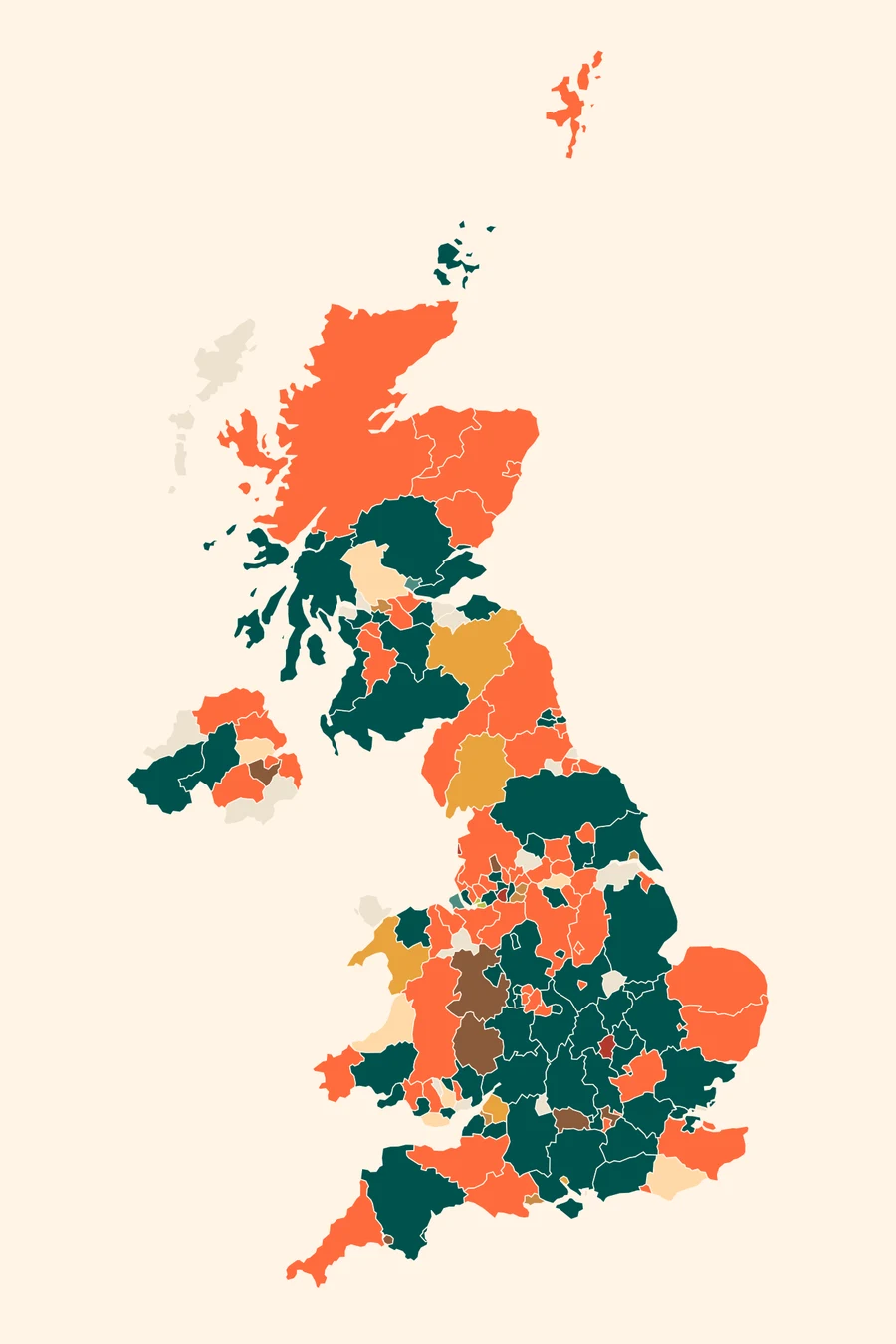
Explore the full map
The county-by-county breakdown above is only the headline. The live map lets you click into any county, switch between best-seller and stocking coverage, and see every minor flavour we did not have room for here.
Why the method matters more than the map
We ran this cold. No client, no brief beyond the one we set ourselves, and nothing to start from but a phone list we assembled from scratch.
A brand running the same exercise on their own accounts starts from a much better position. They have the phone numbers, the purchase history, the delivery cycle, and a reason for the shopkeeper to want to talk.
And the questions do not have to be about flavour. Since we published the map, the conversations we have been having are about other things entirely.
Is the product we are paying for actually on the tap. What are competitors charging on that shelf. Did the point-of-sale material we shipped in March ever go up. Are you going to run out before the weekend.
These are simple factual questions that whoever picks up the phone can answer. They need no buyer decision. They do not cut across a field rep's relationship with an account. And they are the questions brands currently answer by sending one person to a hundred sites and extrapolating across fifteen thousand.
There is a version of this argument that says AI replaces field sales. We do not think that, and the data does not support it. Relationship selling in the accounts that justify it is work humans are better at. Gathering basic operational facts across thousands of accounts nobody has time to visit is a different job, and it has never had a tool that could do it at a sensible cost.
That is what we were testing. 10,000 stores, 48 hours, and about half of them willing to have the conversation.
Run it on your own accounts
If you want to know what your own long tail would say, we can run a version of this on your account base. It takes about a week to set up, and you can try it on a few hundred stores before deciding anything.
About this study
- The BuzzBallz Index is an independent study by the dx. We are not affiliated with or endorsed by BuzzBallz. BuzzBallz is a trademark of Sazerac.
- 10,000 independent UK convenience stores called across England, Scotland, Wales and Northern Ireland, in under 48 hours. 4,701 answered (48%), 4,660 gave usable data.
- Every store was told, on request, that they were speaking with an AI voice agent. No store names, addresses, phone numbers, prices or call recordings are collected or published.
- The campaign was still running when this article was published, so the live map may show slightly different totals to the ones above.
- 18+. Please drink responsibly. UK only.